

The company has developed a novel calculation methodology, which is grounded in the Brazilian Greenhouse Gas Program and has received validation from SGS, a reputable firm specializing in inspection, verification, testing, and certification.
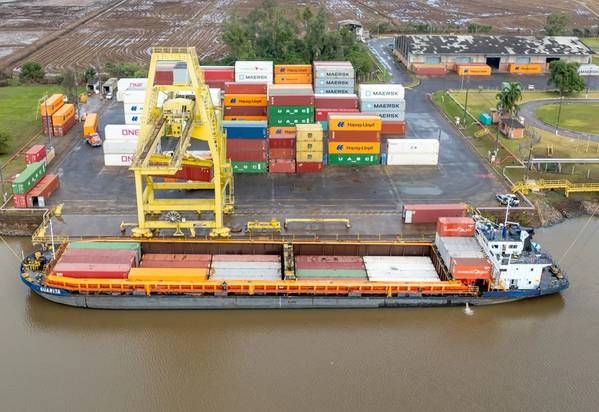
Utilizing this methodology, Wilson Sons evaluated the GHG emissions resulting from cargo operations at the Santa Clara waterway terminal in Triunfo. The results indicated that waterway transportation produces 55% fewer GHG emissions in comparison to road transport.
Additionally, the study conducted a comparative analysis of emissions from river and road transport along the route connecting the Santa Clara and Rio Grande Container Terminals. The findings revealed that road transport of containers generates carbon dioxide equivalent (CO2e) emissions of up to 0.196 tonnes per twenty-foot equivalent unit (TEU), which is twice the emissions produced by river transport. This calculation is based on a barge operating at 90% capacity, reflecting the average occupancy rate at the terminal.
Cleiton Lages, Environment and Safety Manager at Rio Grande Container Terminal, remarked, "The findings of this study represent a significant milestone in the evolution of cargo transportation in Brazil, as they highlight the initiatives undertaken to reduce emissions, promote multimodality, and assist the terminal in achieving its clients' sustainability objectives through the utilization of waterway logistics."